Snakes in Singapore tend to get an unfair reputation. Most people only hear about them when one appears near a housing estate or park, which naturally causes concern. The truth is that most common snakes in Singapore are shy, avoid people, and would rather disappear quietly than cause any trouble.
In urban areas, encounters are usually brief and harmless. Snakes also play an important role in keeping the ecosystem balanced by controlling pests such as rats and lizards. For situations where a snake is found in or around a property, professional pest control services in Singapore can help ensure it is handled safely and responsibly.
This guide walks you through 10 snakes you might come across in Singapore neighbourhoods, where they are typically found, and how to recognise them if you ever spot one.
1. Reticulated Python
Where you might see it:
- Canals and drainage areas
- Reservoirs and water bodies
- Parks and park connectors
Key facts:
- The longest snake in the world, sometimes growing beyond 6 metres
- Feeds mainly on rats and small mammals
- Strong swimmer and comfortable in water-rich environments
These snakes are usually not aggressive and prefer to stay hidden, even in urban areas.
2. Paradise Tree Snake (Paradise Flying Snake)
Where you might see it:
- Trees in parks and nature reserves
- Forest edges and green corridors
Key facts:
- Able to glide between trees by flattening its body
- Feeds on lizards and small frogs
- Mildly venomous but not dangerous to humans
It is more likely to be seen high up in trees than on the ground.
3. Painted Bronzeback
Where you might see it:
- Shrubs and trees in parks
- Park connectors and forest edges
- Resting on branches during the day
Key facts:
- One of the most frequently spotted snakes in Singapore
- Fast and agile in trees
- Feeds mainly on lizards and frogs
Although common, it often goes unnoticed due to its slender body and quick movement.
4. Common Wolf Snake
Where you might see it:
- Residential gardens
- Walls, roofs, and sheltered corners
- Areas where geckos gather around lights
Key facts:
- Nocturnal and active mainly at night
- Feeds on house geckos, which makes it useful in pest control
- Often mistaken for a cobra, but completely harmless
This is one of the species people are most likely to encounter in homes.
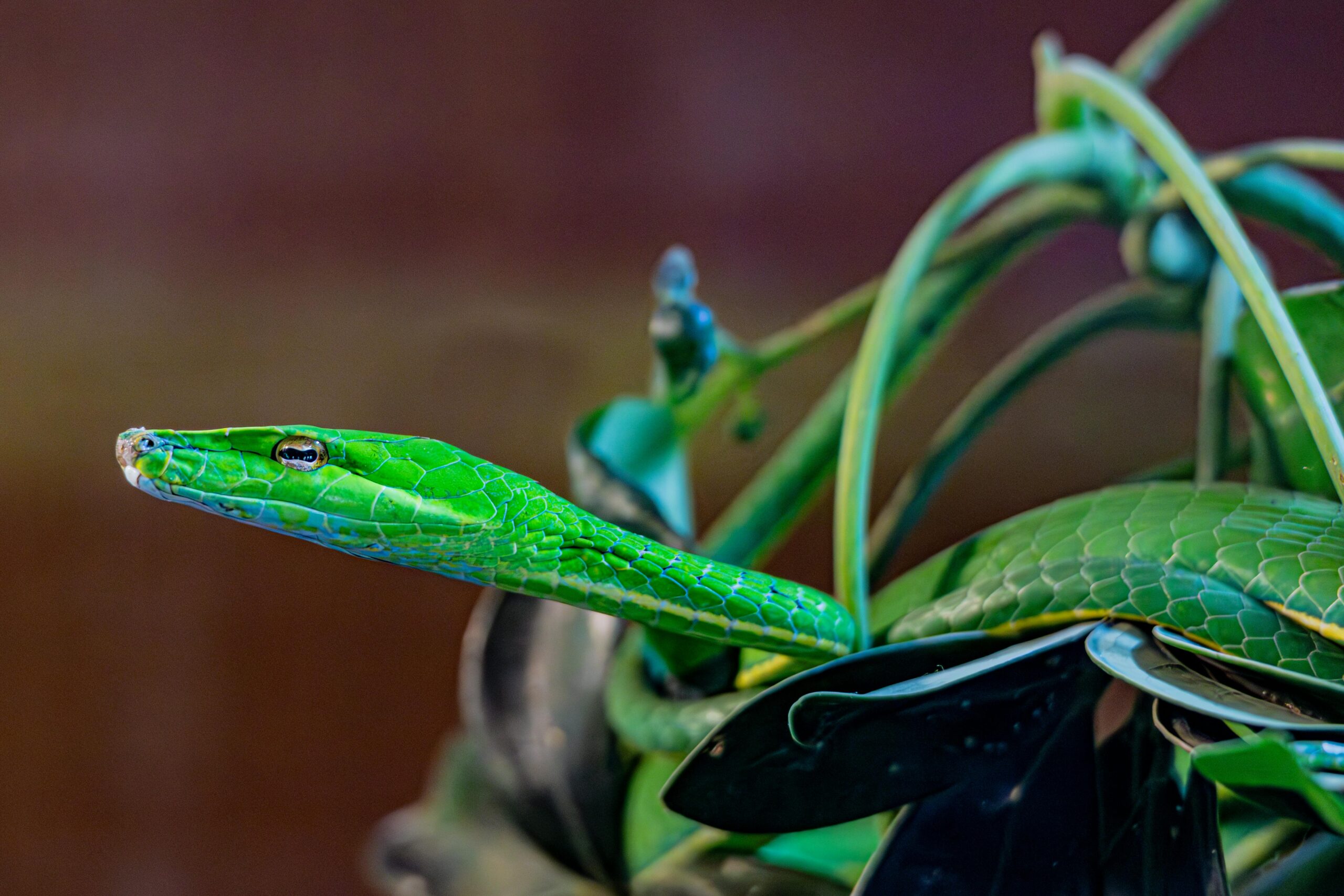
5. Oriental Whip Snake
Where you might see it:
- Vegetation in parks and nature reserves
- Along walking trails
Key facts:
- Slim green body with excellent eyesight
- Hunts during the day
- Feeds on lizards and small vertebrates
- Mildly venomous but not a threat to humans
It is usually very alert and will retreat quickly if disturbed.
6. Equatorial Spitting Cobra
Where you might see it:
- Forest edges and scrub areas
- Overgrown drains and undeveloped land
- Industrial zones near greenery
Key facts:
- Can spray venom towards the eyes as a defence mechanism
- Expands its hood when threatened
- Juveniles often show distinctive markings
This species should always be observed from a distance due to its defensive nature.
7. Twin-barred Tree Snake (Banded Flying Snake)
Where you might see it:
- Tree canopies in parks and reserves
- Dense forested areas
Key facts:
- Rarely seen compared to other tree snakes
- Can glide between trees
- Feeds on lizards and frogs
- Mildly venomous but not harmful to humans
Spotting one is considered uncommon even in nature-rich areas.
8. Striped Kukri Snake
Where you might see it:
- Leaf litter on forest floors
- Parks and nature reserves
- Forest edges
Key facts:
- Named after its curved, knife-like teeth
- Often mistaken for a more dangerous species
- Helps control small reptile populations
It usually stays close to the ground and avoids open spaces.
9. Malayan Racer
Where you might see it:
- Forest edges
- Vegetated trails
- Occasionally, near residential greenery
Key facts:
- Very fast-moving and alert
- Rarely seen for long, as it escapes quickly
- Feeds on frogs, lizards, and small mammals
Despite its name, it is more shy than threatening.
10. Indochinese Rat Snake
Where you might see it:
- Grasslands and farms
- Forest edges and semi-rural areas
- Places with rodent activity
Key facts:
- Can grow up to 2 metres in length
- Plays a major role in controlling rat populations
- Often found where food sources are available
This species is actually beneficial in reducing rodent issues in both rural and urban-fringe areas.
What To Do If You See a Snake in Singapore
Seeing a snake can be surprising, especially in a residential area, but the best response is usually simple.
- Stay calm and do not panic
- Keep a safe distance and observe quietly
- Do not try to touch, trap, or chase it
- Allow it to leave on its own
If the snake is in a home, workplace, or high-traffic area, it is safer to seek professional help. In such cases, trained experts in wildlife management services can safely assess and handle the situation.
Why Snakes Matter in Singapore’s Ecosystem
Although they are often misunderstood, snakes are an important part of Singapore’s natural balance. They help control populations of rodents and other small animals, which in turn reduces the spread of pests in urban environments.
When people understand their role, it becomes easier to see snakes not as threats, but as part of a functioning ecosystem that supports healthier living spaces.
Conclusion
Snakes are a natural part of Singapore’s environment, and most species you may encounter are harmless and prefer to avoid humans. With a better understanding of how they behave and where they are found, encounters become far less alarming.
If you ever find a snake in or around your property and are unsure what to do, it is best to contact our team for prompt and professional assistance. Acting calmly and responsibly ensures both your safety and the wellbeing of the animal.
Frequently Asked Questions
Stay calm, keep your distance, and avoid any interaction. Most snakes will move away if left alone.
Most are not dangerous to humans. Only a few species are venomous, and bites are very rare.
They usually follow food sources such as rats and lizards, which are common in urban environments.
Keep your surroundings clean, reduce clutter, manage pests like rodents, and seal gaps or openings.
Yes, some species can climb, but they usually only enter if there is food or shelter nearby.