Have you ever paused for a moment while walking through your Singapore neighbourhood and really listened?
Between the hum of traffic, children playing at the playground, and the everyday bustle of HDB estates, there is another layer of sound many people miss at first, birdsong. Once you start noticing it, you will realise that birds are not just in nature reserves or big parks. They are right here with us, sharing the same rooftops, trees, drains, and green corners of our estates.
Singapore is often seen as a concrete city, but it is also surprisingly rich in urban biodiversity. With support from companies such as All Out Pest Management, which promote responsible urban wildlife awareness and management, there is a growing appreciation for how humans and nature coexist in the same spaces. Beyond familiar urban birds such as crows, mynahs and pigeons, many native bird species in Singapore neighbourhoods quietly thrive in plain sight.
Here are 10 common native birds you might spot or hear around your neighbourhood, especially if you start paying closer attention during your daily walks.
1. Black-naped Oriole
This is one of the easiest birds to recognise once you know what to look for.
Its bright yellow body often stands out among green foliage, but more often than not, you will hear its flute-like whistle before you see it.
Where you might spot it:
- Mature trees in housing estates
- Parks and green corridors
What makes it interesting:
- Bright yellow plumage that looks almost glowing in sunlight
- Builds delicate hanging nests between branches
- Feeds mainly on insects hidden in tree canopies
2. Asian Koel
This bird is one of the most recognisable voices in Singapore mornings.
Even if you have never seen it clearly, you have almost certainly heard its repetitive “koo-oo” call echoing through neighbourhoods.
Where you might hear it:
- Tall trees in HDB estates
- Fruit-bearing trees in parks
What makes it interesting:
- Males are glossy black, while females are brown with white speckles
- Known for brood parasitism, laying eggs in other birds’ nests
- Strong association with fruiting trees in urban areas
3. Zebra Dove
This is a quiet, unassuming bird that blends easily into everyday surroundings.
Unlike most birds, it prefers walking slowly along pavements instead of hopping or flying frequently.
Where you might spot it:
- HDB void decks
- Sidewalks and grassy patches
What makes it interesting:
- Soft, rhythmic whistling call
- Often seen alone or in pairs
- Extremely comfortable in urban environments
4. Spotted Dove
At first glance, it may look like a typical city pigeon, but its patterned neck makes it easy to identify once you notice it.
It is one of the most familiar birds in residential areas across Singapore.
Where you might spot it:
- Pavements and parks
- Open grassy areas around estates
What makes it interesting:
- Distinct black-spotted collar pattern on its neck
- Highly adaptable to urban living
- Builds simple twig nests in trees
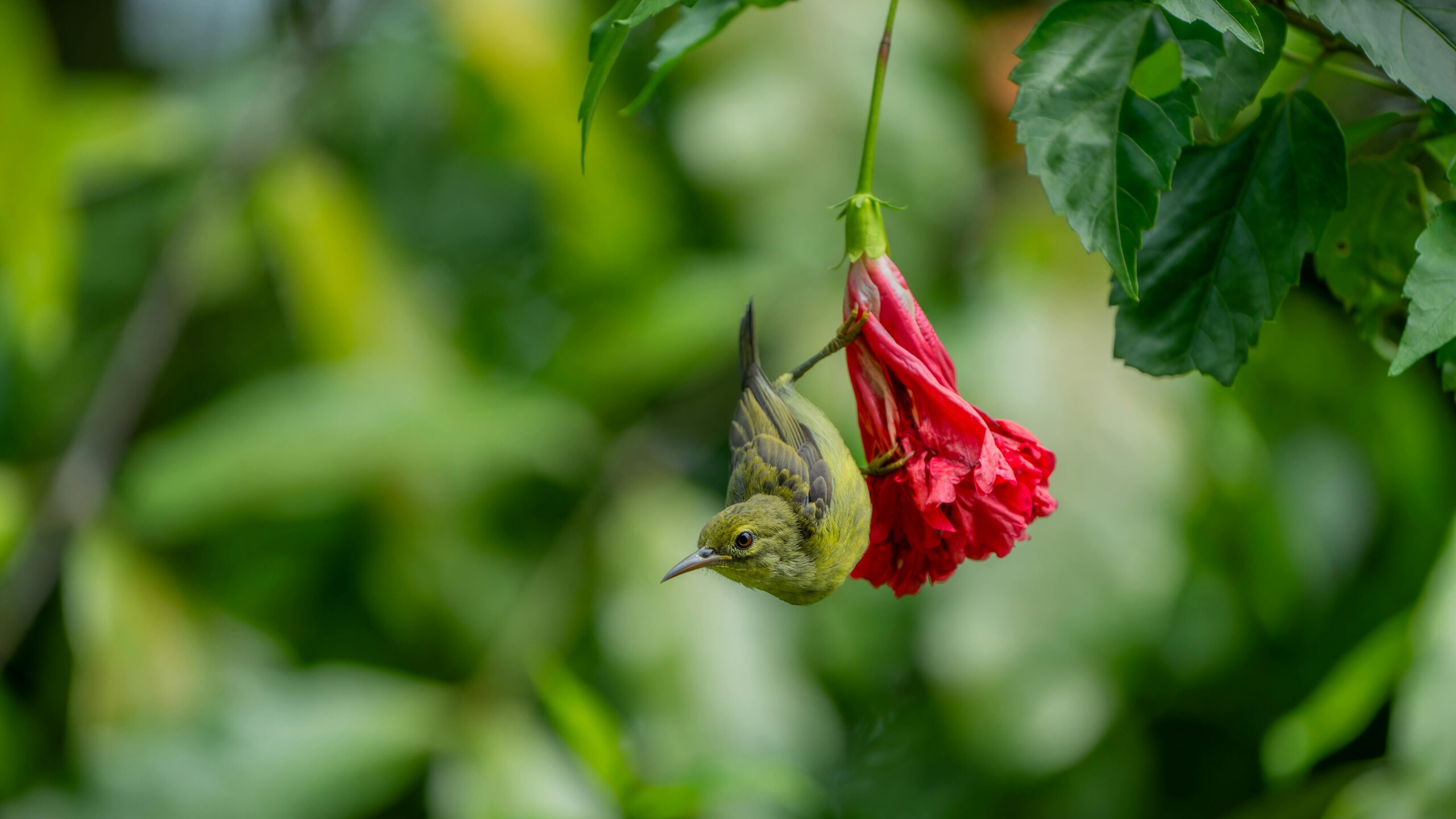
5. Ornate Sunbird
If you have flowering plants in your neighbourhood, you may already have seen this tiny, energetic bird darting between blooms.
It moves so quickly that it is often mistaken for an insect at first glance.
Where you might spot it:
- Flower gardens and landscaped parks
- Community green spaces
What makes it interesting:
- Feeds on nectar, helping with pollination
- Males have striking metallic blue and yellow colouring
- Builds hanging nests using spider silk and plant fibres
6. Oriental Magpie-Robin
This bird is one of the most musical residents in Singapore’s urban landscape.
Its song is rich and varied, often changing patterns as it sings from rooftops or trees.
Where you might spot it:
- Rooftops and fences
- Parks and wooded corridors
What makes it interesting:
- Known for mimicry and complex vocalisations
- Distinct black-and-white appearance, with females appearing greyer
- Often flicks its tail while foraging
7. Asian Glossy Starling
This is a highly social bird often seen moving in noisy flocks across neighbourhood trees.
If you see a fruiting tree suddenly becoming very active, chances are this species is nearby.
Where you might spot it:
- Trees near markets and food centres
- Residential fruit trees
What makes it interesting:
- Metallic green-purple sheen with red eyes
- Travels in lively groups
- Feeds on fruit, insects and occasional scraps
8. White-throated Kingfisher
This striking bird is often seen perched quietly near water before suddenly diving for prey.
Its bright blue wings make it especially noticeable during flight.
Where you might spot it:
- Canals and reservoirs
- Park ponds and waterways
What makes it interesting:
- Hunts insects, frogs and small reptiles
- Waits patiently before striking
- Bright blue wings flash vividly in motion
9. White-breasted Waterhen
This bird prefers staying hidden, making it slightly harder to spot than others on this list.
It is more often heard rustling in vegetation than seen clearly.
Where you might spot it:
- Thick vegetation near canals
- Reservoir edges and wetlands
What makes it interesting:
- Large feet help it walk on floating vegetation
- Chicks are completely black at birth
- Prefers staying close to cover near water
10. Red Junglefowl
This bird often surprises people when they encounter it in the wild.
It is actually the wild ancestor of domestic chickens.
Where you might spot it:
- Nature parks and forest edges
- Quiet green areas near reservoirs
What makes it interesting:
- Males have vibrant, colourful plumage
- Distinct crowing sounds compared to domestic chickens
- Thrives in natural and semi-wild habitats
Living Alongside Urban Wildlife in Singapore
Encounters with birds and other urban wildlife are a normal part of life in Singapore. Most of the time, these sightings are harmless and simply part of the city’s natural rhythm.
However, there are occasions where wildlife may enter homes, nesting areas, or shared spaces and require careful handling. In such cases, professional support ensures situations are managed safely and responsibly.
If you ever encounter such situations, you can rely on expert help through trusted wildlife management services.
Conclusion
Native birds are a quiet but important part of everyday life in Singapore, from housing estates to parks and waterways. Learning to recognise these common species helps you better appreciate the biodiversity around your home and the natural balance within urban spaces.
If you notice unusual bird activity or need help with urban wildlife concerns, you can always speak with our team for professional advice and support.
Frequently Asked Questions
Common native birds include the Asian Koel, Black-naped Oriole, Zebra Dove, Spotted Dove and Asian Glossy Starling.
Look at their colour, size and behaviour, and listen to their calls, such as the Koel’s “koo-oo” sound or the Oriole’s whistle.
You can see them in HDB estates, parks, canals and green spaces, especially in the early morning.
No, most native birds are harmless and avoid people. They also help with pest control and pollination.
Because Singapore has many trees, parks and waterways that provide food and shelter for urban wildlife.