Termites are a persistent and costly problem in many parts of the world, especially in warm, humid climates like Singapore. One of the most active times for termite infestations is during termite swarm season. Understanding what this season entails, what signs to look out for, and what immediate steps to take can save your property from extensive damage. In this comprehensive guide, we will break it all down and help you make informed decisions about pest control for termites.
What is Termite Swarm Season?

Termite swarm season refers to the period when reproductive termites commonly known as alates emerge from their existing colonies in large numbers to find mates and establish new colonies. These winged termites are an essential part of the termite life cycle and are often mistaken for flying ants due to their similar size and shape. However, they can be distinguished by their straight antennae, uniform waist, and wings of equal length.
This season plays a crucial role in the spread of termite infestations. When alates swarm, they are actively looking for places with the right environmental conditions, moisture, warmth, and access to wood to start a new colony. As they pair off, shed their wings, and burrow into wood or soil, new termite infestations can take root, often within or around residential and commercial properties.
In Singapore, termite swarming typically occurs during the wetter months, with increased activity following rainfall. The swarming season usually spans from March to August, a time when high humidity levels and warm temperatures make it ideal for termites to leave their nests and begin their search for a new home. This seasonal behaviour is not only predictable but also preventable if homeowners and property managers remain vigilant.
Spotting the first signs of a swarm is vital. Often, the presence of winged termites near windows, doors, or lights indicates that a colony is nearby. Discarded wings are a common after-effect of swarming events, and their appearance indoors is a strong warning sign that termites have found a way into the building.
Understanding when termite swarm season occurs and the environmental conditions that trigger it enables property owners in Singapore to take proactive steps. Scheduling routine inspections, sealing cracks in structures, and engaging professional pest control for termites can significantly reduce the risk of infestation.
By being informed and alert during termite swarm season, you can protect your home or business from one of the most destructive pests in the region.
Why Termite Swarms Matter
Termite swarms are more than just an annoyance they are a clear indicator of a much deeper issue that may be developing within or near your property. When termites swarm, it means that the colony has reached a level of maturity where it is capable of producing alates, also known as reproductive termites. These winged termites are designed to leave their existing nest in search of new locations to establish fresh colonies. Their emergence is a sign that a well-established termite colony is thriving in the vicinity.
While the swarm itself may not cause immediate damage to your property, it serves as a highly visible warning sign. Most of the structural damage caused by termites happens quietly and out of sight. However, when swarming occurs, it often signals that the silent destruction has already been underway for months, or even years. In essence, a termite swarm is a red flag indicating that you may already have a serious infestation, or that one could soon begin if immediate action isn’t taken.
In Singapore’s warm and humid climate, termites thrive and reproduce rapidly. A single colony can produce thousands of alates, and when these termites land in a new, favourable location, they shed their wings and begin burrowing into wooden structures, furniture, or even books and important documents. It only takes a short amount of time for a small pair to establish a functioning colony that can grow to millions.
Allowing even one swarm to go unchecked can lead to significant consequences, including expensive repairs, health hazards due to mould and decaying wood, and reduced property value. That’s why the moment you notice signs of swarming such as flying insects near lights or piles of discarded wings it’s essential to call in professional pest control for termites. Immediate assessment and action can prevent long-term damage and offer peace of mind
Common Signs of a Termite Swarm

Identifying a termite swarm early can help you act quickly. Here are some common signs:
- Winged termites flying near windows or light sources
- Discarded wings around windowsills or doors
- Mud tubes along walls or wooden structures
- Hollow-sounding wood when tapped
- Droppings or frass (tiny wood-coloured pellets)
If you notice any of these signs, it’s crucial to contact a professional for pest control for termites immediately.
What To Do If You Spot a Termite Swarm
- Don’t Panic, But Act Fast: Killing the visible swarm doesn’t eliminate the colony. Avoid using sprays, as this can scatter them.
- Document the Evidence: Take photos of the termites and affected areas.
- Avoid Disturbing the Area: Disturbing the site can make the termites go deeper into hidden parts of your home.
- Contact a Professional Pest Control Service: Call experts like All Out Pest Management to perform a thorough inspection and treatment.
Why Choose All Out Pest Management in Singapore?
At All Out Pest Management, we specialise in providing professional pest control for termites. With years of experience and a deep understanding of Singapore’s unique climate and pest challenges, we offer tailored solutions that:
- Detect and eradicate termite colonies
- Prevent future infestations
- Use safe and effective treatment methods
We follow Integrated Pest Management (IPM) practices and ensure our services align with the latest safety and environmental standards.
Preventing Future Termite Infestations
Even after treatment, it’s essential to maintain a termite-free environment. Here’s how:
- Eliminate Moisture: Fix leaky taps and ensure proper drainage.
- Remove Wood-to-Soil Contact: Termites often enter homes through soil-to-wood bridges.
- Regular Inspections: Schedule annual inspections with pest control professionals.
- Keep Surroundings Clean: Avoid storing wood, cardboard, or newspapers near your property.
Termites in Commercial Spaces
Businesses, especially those dealing with wooden furniture, archives, or paper documents, are at higher risk. A termite infestation can cause significant operational disruptions and financial losses.
That’s why commercial properties should invest in routine inspections and immediate treatment plans offered by experienced pest management providers like us.
How Our Treatment Works
When you engage All Out Pest Management, you are choosing a comprehensive and reliable solution to your termite concerns. Our termite treatment process is designed to be thorough, safe, and effective, ensuring the complete eradication of termites from your home or commercial premises. Here is how our treatment service works in detail:
1. Inspect
Our team begins with a meticulous on-site inspection. We conduct both visual and instrument-assisted assessments to detect termite activity, identify vulnerable entry points, and evaluate existing damage. Tools such as moisture meters, thermal imaging cameras, and sounding devices are used to locate hidden colonies and structural weaknesses without causing unnecessary damage to your property.
2. Identify
Next, we accurately identify the termite species involved whether subterranean, drywood, or dampwood termites. Each type requires a unique approach to treatment. We also determine the level of infestation, the spread, and the root cause, whether it’s moisture build-up, wood-to-soil contact, or nearby vegetation.
3. Treat
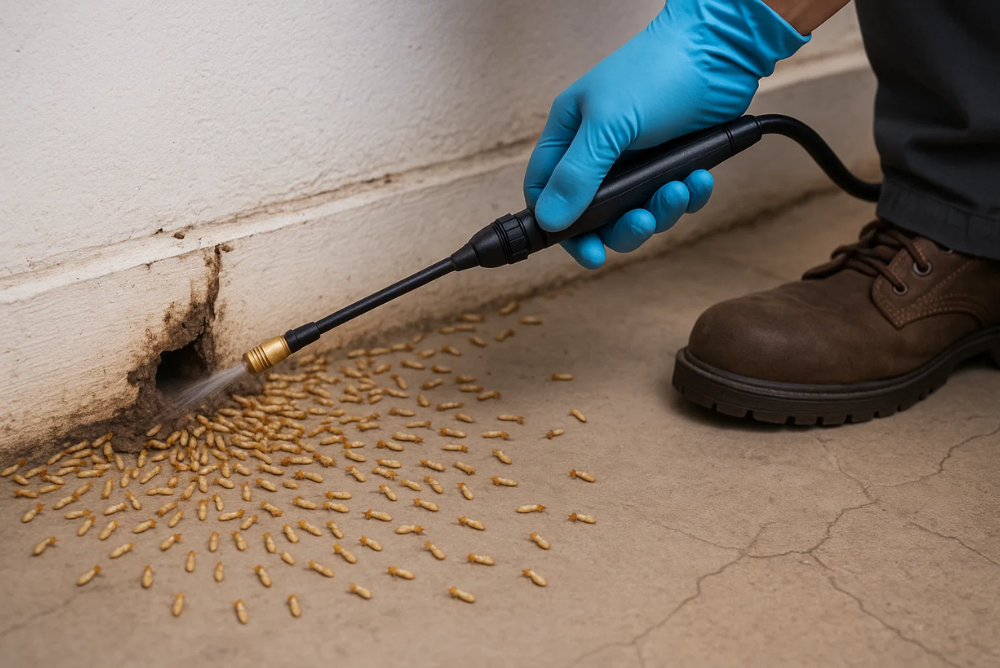
Depending on the diagnosis, we implement the most appropriate treatment method. This may involve soil treatment using termiticides to create a chemical barrier, baiting systems that attract and eliminate colonies, or direct wood treatments to destroy termites already inside the structure. All our treatments are applied with utmost care, keeping safety and environmental impact in mind.
We also offer post-construction and pre-construction termite treatments for long-term prevention.
4. Monitor
After treatment, we do not simply walk away. Our team will schedule follow-up inspections to ensure the infestation has been completely eradicated. Ongoing monitoring systems may be installed to provide early warning against future infestations. We also provide maintenance advice to help you avoid future termite problems.
Our systematic and scientific approach ensures peace of mind and long-term protection. At All Out Pest Management, we deliver more than just treatments we deliver lasting solutions for effective pest control for termites.
Frequently Asked Questions (FAQs)
Termite swarming typically occurs between March and August, especially after heavy rains.
Termites have straight antennae, equal-length wings, and a uniform waist. Flying ants have elbowed antennae, uneven wing sizes, and a narrow waist.
While DIY methods may reduce visible termites temporarily, they rarely eliminate the colony. Professional pest control for termites is strongly recommended.
Conclusion
Termites may be small, but the damage they cause is anything but minor. Understanding the patterns of termite swarm season in Singapore allows you to stay one step ahead. By knowing the signs, taking timely action, and partnering with professionals like All Out Pest Management, you can ensure your home or business remains safe and termite-free all year round.
Prevention and prompt response are key. If you suspect any termite activity or want to take preventive measures don’t hesitate. We’re here to help with expert pest control for termites, tailored specifically for Singapore’s climate and building styles.